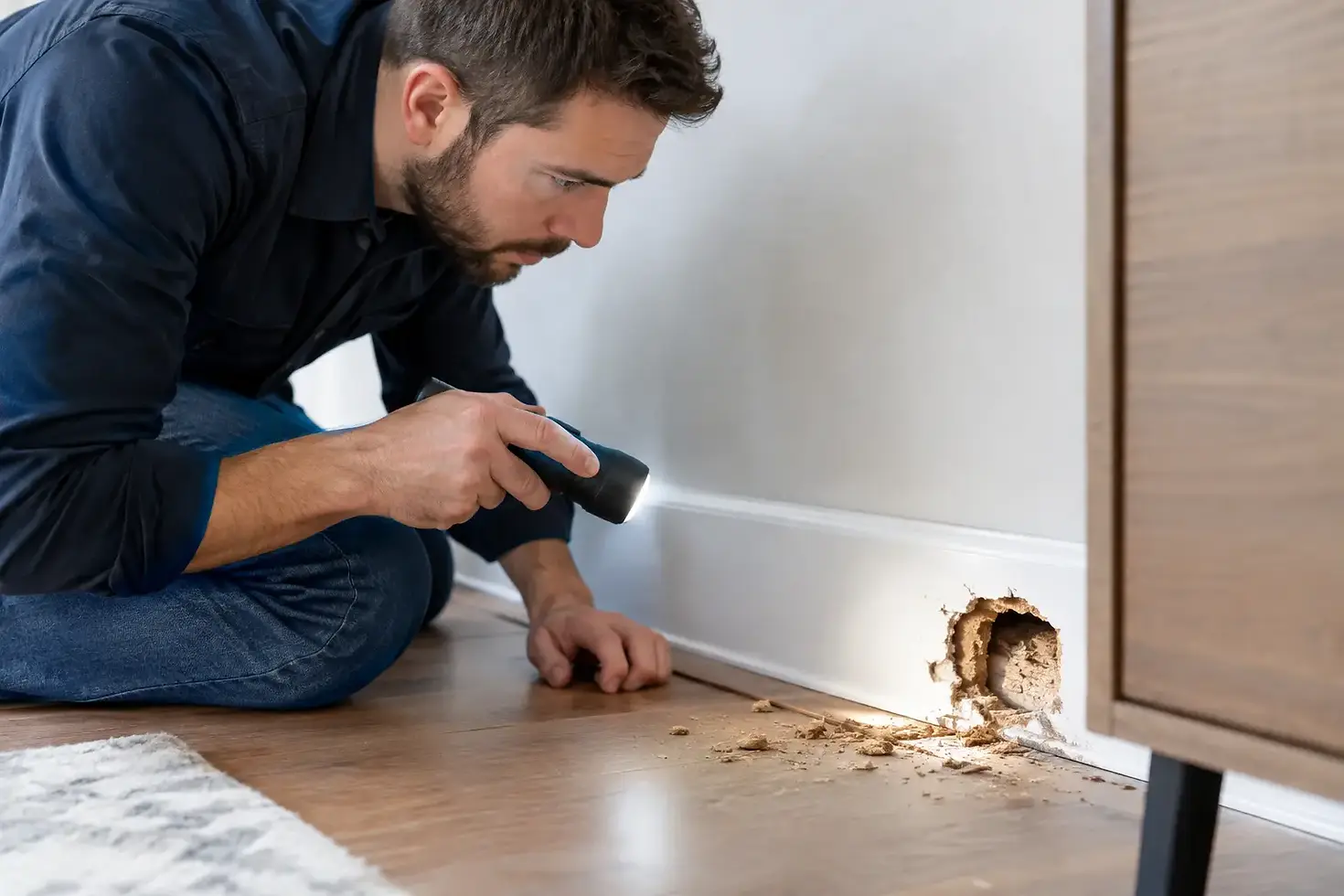
How to Inspect Rodent Damage in Your Home

A faint scratching sound in the wall, a chewed cereal box, or a strange odor in the attic can be the first sign of a much larger problem. Knowing how to inspect rodent damage helps you act before mice or rats contaminate living spaces, damage wiring, or create costly repairs. The key is to inspect carefully without disturbing nesting areas, droppings, or electrical hazards.
Rodents are common around Columbia-area homes, especially when cooler weather, heavy rain, or nearby construction pushes them toward dry shelter. Mice can fit through openings as small as a dime, while rats can enter through gaps around pipes, vents, rooflines, and crawlspace doors. Finding the damage is only part of the job. A complete inspection should identify where they entered, where they traveled, and what needs to be cleaned, repaired, and sealed.
Start Your Rodent Damage Inspection Safely
Before entering an attic, crawlspace, garage, or storage room, protect yourself from contaminated dust and hidden hazards. Wear disposable gloves, long sleeves, closed-toe shoes, and a properly fitted mask rated for fine particles. Keep children and pets away from the area until it has been assessed and cleaned.
Do not sweep, vacuum, or blow around dry droppings. That can stir contaminated particles into the air. If you find a small amount of droppings in an accessible area, lightly mist them with an appropriate disinfectant, let the surface sit briefly, and wipe them up with disposable paper towels. Bag the waste before placing it in an outdoor trash container.
Use a bright flashlight and move slowly. Rodents often travel along walls, beams, plumbing lines, and stored belongings rather than crossing open spaces. In an attic or crawlspace, step only on secure framing or approved walk boards. Ceiling drywall, old insulation, exposed nails, and loose electrical wiring can turn a simple inspection into an injury.
Signs of Rodent Damage to Look For
Fresh evidence matters more than a single old dropping behind a box. Look for patterns that tell you whether rodents are active now and where they are moving through the home.
Droppings, Urine, and Odors
Mouse droppings are generally small, dark, and pointed at the ends. Rat droppings are larger and more blunt or capsule-shaped. Fresh droppings may look darker and slightly shiny, while old droppings usually fade to gray and crumble easily. You may find them under sinks, behind appliances, inside cabinets, along attic edges, or near stored food and pet food.
A strong, stale ammonia-like smell may indicate urine accumulation, especially in enclosed rooms, wall voids, crawlspaces, or insulation. Do not assume the odor will disappear after trapping one animal. Urine-soaked insulation, nesting materials, and contaminated surfaces often require thorough cleanup to restore healthy conditions.
Gnaw Marks on Wood, Plastic, and Food Packaging
Rodents must gnaw continuously to wear down their front teeth. Check baseboards, cabinet corners, cardboard boxes, stored clothing bins, pet-food containers, plastic water lines, and wood framing. Fresh gnawing often exposes lighter-colored wood or clean plastic beneath the surface.
Chewed food packages are a clear sign of contamination. Throw away food, disposable packaging, paper goods, and other items with visible bite marks, droppings, or urine staining. Even sealed packages may be unsafe if they have been damaged or stored in a heavily contaminated location.
Damaged Electrical Wiring
Chewed wiring is one of the most serious forms of rodent damage. In attics, crawlspaces, utility rooms, and behind appliances, inspect visible wire insulation for tooth marks, bare copper, fraying, or shredded sections. Mice and rats may also chew appliance cords, HVAC wiring, cable lines, and low-voltage wires.
Never touch exposed or damaged wiring. If you see chewed electrical insulation, smell burning, notice flickering lights, or find a tripped breaker near an active rodent area, stop the inspection and contact a qualified electrician. Rodent-related wire damage can create a fire risk long after the animals are gone.
Nesting Material and Insulation Damage
Rodents build nests from shredded insulation, paper, fabric, cardboard, leaves, and soft household materials. In an attic, look for insulation that has been pulled apart, flattened into paths, or gathered into compact piles. In a crawlspace, nesting material may be tucked near ductwork, plumbing, foundation walls, or stored items.
Insulation can also hold urine, droppings, and odor. A small localized nest may be removable after the infestation is addressed. Widespread contamination or compressed attic insulation often calls for professional removal and replacement, particularly when the material has lost its ability to insulate the home effectively.
Rub Marks and Greasy Travel Paths
Rats commonly leave dark, greasy rub marks as their fur repeatedly brushes against walls, pipes, beams, and entry openings. These marks are most visible near established runways. Mice may leave lighter tracks, but you can sometimes see small footprints or tail marks in dusty areas.
Pay close attention to edges. Inspect the perimeter of garage walls, attic framing, crawlspace supports, kitchen cabinets, and utility penetrations. A trail of droppings or rub marks often leads back to a gap that needs exclusion work.
Inspect the Outside for Entry Points
A rodent problem is rarely solved from inside the house alone. Walk the exterior slowly, checking the foundation, siding, roofline, and areas where utility lines enter the building. Focus on openings that connect directly to protected voids, such as attics, walls, and crawlspaces.
Look closely around damaged vent screens, loose crawlspace doors, gaps beneath garage doors, unsealed pipe openings, roof returns, soffits, and areas where siding has pulled away from trim. Trees or vines touching the roof can provide a pathway for rodents and squirrels, while clutter, stacked firewood, and dense vegetation near the foundation offer cover.
Do not seal every opening immediately if rodents may still be inside. Closing the wrong gap can trap animals in walls or drive them into another part of the home. A professional inspection identifies active entry points, uses appropriate trapping or one-way exclusion methods, and seals access only when it is safe to do so.
Check High-Risk Areas Room by Room
The kitchen, pantry, laundry room, garage, attic, and crawlspace deserve the closest attention. In kitchens, pull out appliances if it can be done safely and inspect the wall behind the refrigerator, stove, and dishwasher. Look beneath sinks for droppings, gnawing, and gaps around plumbing pipes.
In the garage, inspect stored boxes, pet-food bags, seasonal decorations, and the lower corners of walls. Garages often provide the first sheltered stop before rodents move into living areas. Plastic storage bins with tight-fitting lids are much more protective than cardboard.
In an attic, look along the outer edges, behind stored items, and around vents. In a crawlspace, inspect insulation, ductwork, vapor barriers, plumbing lines, and foundation vents. If the space is tight, heavily soiled, damp, or has damaged wiring, it is safer to stop and arrange a professional assessment.
Know When Rodent Damage Requires Professional Help
A few old droppings in a garage may be manageable with careful cleaning and preventive sealing. The situation changes when you find repeated droppings, nests, chewed wiring, widespread insulation damage, strong odors, or evidence that rodents are entering wall voids. Those signs point to an active or recurring infestation, not a one-time visitor.
Professional rodent control should address the whole property problem: humane removal or trapping, identification of entry routes, exclusion repairs, cleanup of contaminated material, and repairs that protect your home from future access. This approach matters because poison alone may leave dead rodents inside walls and does nothing to stop the next animal from using the same opening.
For homeowners in Columbia, Forest Acres, Lexington, and nearby communities, Carolina Critters can inspect suspected rodent activity, locate vulnerable access points, and recommend a clear path to removal, cleanup, and lasting protection. Fast action can limit contamination and prevent minor gnaw marks from becoming expensive structural or electrical repairs.
If your inspection reveals fresh droppings, chewed wires, nesting material, or an active entry point, treat it as a property-protection issue rather than a nuisance to put off. Securing the home properly now helps keep rodents out of the spaces where your family sleeps, stores food, and feels safe.


Comments