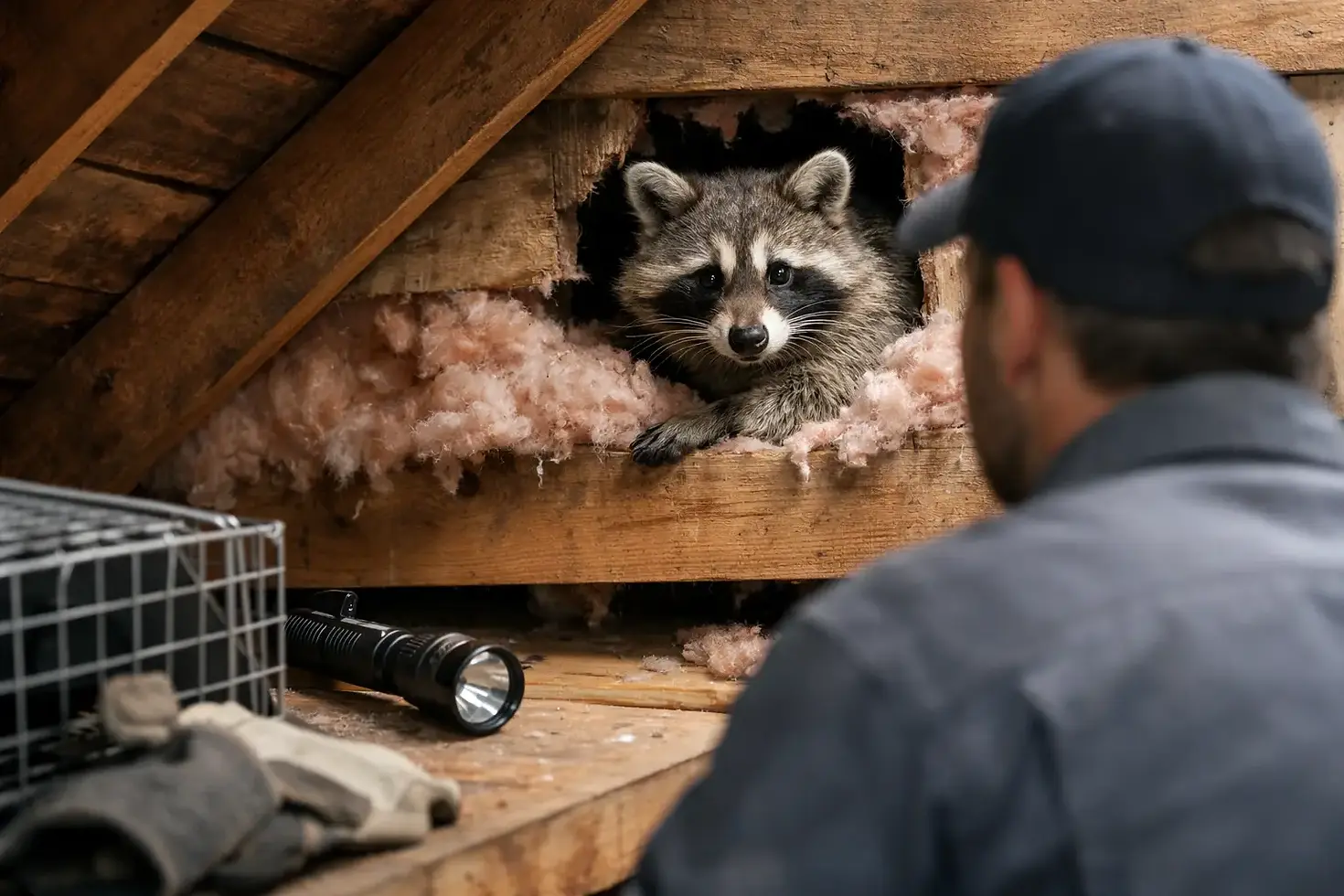
Raccoon Removal From Attic: What to Do First

A raccoon in the attic is more than an unsettling noise overhead. It can tear insulation, damage ductwork, contaminate stored belongings, and create openings that invite more wildlife inside. Raccoon removal from attic spaces should be handled quickly, but it should not begin with sealing a hole or trying to scare the animal out. The safest solution protects your family, your home, and the animal while addressing the reason it got inside.
For homeowners in Columbia, Forest Acres, Lexington, and nearby South Carolina communities, the first priority is preventing contact. Raccoons are strong, intelligent animals that may bite or scratch when cornered. They can also carry parasites and leave droppings or urine in areas that are difficult to reach safely. A professional inspection can identify the entry point, determine whether young raccoons are present, and build a removal plan that does not leave animals trapped behind your walls or ceiling.
Signs a Raccoon May Be Living in Your Attic
Raccoons are primarily active at night, so the sound often begins after the house gets quiet. Homeowners may hear heavy walking, thumping, scratching, chattering, or a dragging sound above the ceiling. Unlike mice or squirrels, raccoons tend to sound surprisingly large. Their movement may be concentrated near the roofline, soffits, vents, or a particular section of the attic.
Outside, look for displaced vent covers, loose soffit panels, bent roof flashing, torn screens, or damage around gaps where the roof meets the house. Raccoons can pull apart weak materials and enlarge small openings. Greasy smudges, muddy paw prints, and scattered insulation near an access point can also point to activity.
The odor may be another clue. Raccoon waste can create a strong, unpleasant smell, especially when an animal has used the same attic area repeatedly. If you notice staining on ceilings, moisture around light fixtures, or a sudden insect problem, contamination may already be affecting the space above your living area.
What to Do Before Raccoon Removal From an Attic
Do not enter the attic to investigate, and do not block the opening you believe the raccoon is using. Those two well-meant actions can turn a wildlife problem into a more expensive repair. An adult raccoon may become trapped inside and damage more of the structure trying to escape. If babies are present, separating them from their mother can lead to noise, odor, and a difficult recovery situation.
Keep children and pets away from any area where the animal may be entering or exiting. If the raccoon has appeared in a living space, close interior doors when possible and give it a clear route away from people. Avoid using poison, smoke, chemical repellents, or a loud radio in the attic. These methods are unreliable, can create unsafe conditions, and often leave the underlying entry point open for the next animal.
A few details can help a wildlife professional respond efficiently. Note when you hear activity, where it seems to be coming from, and whether you have seen an adult raccoon enter or leave. Photos of visible exterior damage can be useful, but do not climb onto a roof or ladder to get them. Roof edges and attic access points are already vulnerable areas, and urgency is not worth a fall.
Why Timing Matters During Raccoon Season
The right removal method depends on what is happening inside the attic. A lone adult raccoon may be using the space as a temporary den, while a mother with kits needs a carefully planned approach. Young raccoons cannot always leave the attic on their own. Installing a one-way exclusion device too early, or closing an entry point without an inspection, may strand them inside.
This is why a professional process starts with identifying the animal, locating all active and potential entry points, and checking for signs of a family group. Humane removal is not simply about getting an adult out of the building. It means accounting for dependent young and choosing a method that encourages a safe, efficient relocation without creating a second problem in your home.
Seasonal conditions also affect damage. During hot Columbia summers, attic odors and contamination can intensify quickly. Heavy rain can reveal roof or soffit weaknesses that raccoons exploit. Responding early limits the time an animal has to pull insulation apart, chew vulnerable materials, or establish a repeated denning site.
The Professional Removal and Exclusion Process
Effective attic wildlife service is a property-protection project, not a trap-and-leave visit. After a detailed inspection, the technician determines how the raccoon entered and whether there are secondary gaps that could be used once the main access point is closed. Raccoons may return to a familiar den site, so every vulnerable opening matters.
Humane removal methods are selected based on the structure, the animal's behavior, and whether young are present. The goal is to remove the raccoon without exposing homeowners to direct contact or trapping animals inside. Once the attic is confirmed clear, exclusion work can begin.
Exclusion means repairing and reinforcing the places wildlife uses to enter. Depending on the home, this may include securing attic vents, repairing damaged soffits, reinforcing roofline gaps, screening vulnerable openings, or addressing weak areas around utility penetrations. Quality repair work must fit the structure and stand up to a raccoon's strength. A thin or loosely attached patch is often just a temporary invitation.
Carolina Critters approaches raccoon problems with this full process in mind: humane handling, removal, cleanup, repair, and prevention designed to restore your family's peace of mind.
Cleanup Is Part of Protecting the Home
Removing the animal is essential, but it does not erase the mess left behind. Raccoon urine and droppings can contaminate insulation, wood surfaces, stored materials, and air pathways. Damaged insulation loses effectiveness, while damp or soiled material can hold odor and attract insects.
A proper cleanup plan may involve removing contaminated debris, treating affected surfaces, and replacing insulation when the damage is significant. The scope depends on how long the raccoon was present, how much waste accumulated, and whether it spread beyond one area. In some homes, a targeted cleanup is enough. In others, extensive contamination or water damage calls for broader remediation.
Electrical concerns should also be taken seriously. Wildlife activity near wiring, junction boxes, and ductwork can create risks that are not visible from below. If you have experienced flickering lights, a burning smell, damaged ceiling material, or evidence of chewed wiring, treat it as an urgent issue and have the area assessed promptly.
Why DIY Raccoon Removal Can Backfire
Homeowners often want the fastest possible fix, especially after losing sleep to attic noise. But raccoons are not a simple nuisance to chase away with a broom or a store-bought repellent. Direct handling exposes you to bites, scratches, and contamination. It can also cause the animal to retreat deeper into the structure, where it is harder to remove.
DIY trapping has its own trade-offs. A trap may catch the wrong animal, separate a mother from her young, or fail to solve the open access point that caused the problem. Relocation rules and humane handling requirements can also apply, making professional guidance especially valuable.
The lasting answer is to identify the full situation before closing the home. That is what prevents a raccoon from returning, another animal from using the same gap, or hidden young from becoming trapped in the attic.
Act Before Small Damage Becomes a Major Repair
If you hear heavy movement overhead, see roofline damage, or notice signs of an attic intruder, call for professional help as soon as possible. Fast action can reduce contamination, protect insulation and electrical systems, and keep an entry point from becoming a recurring wildlife route.
Your attic should protect the rooms below it, not become a den for raccoons. A careful inspection and humane, complete removal plan can put your home back where it belongs: quiet, secure, and ready for your family to enjoy.


Comments