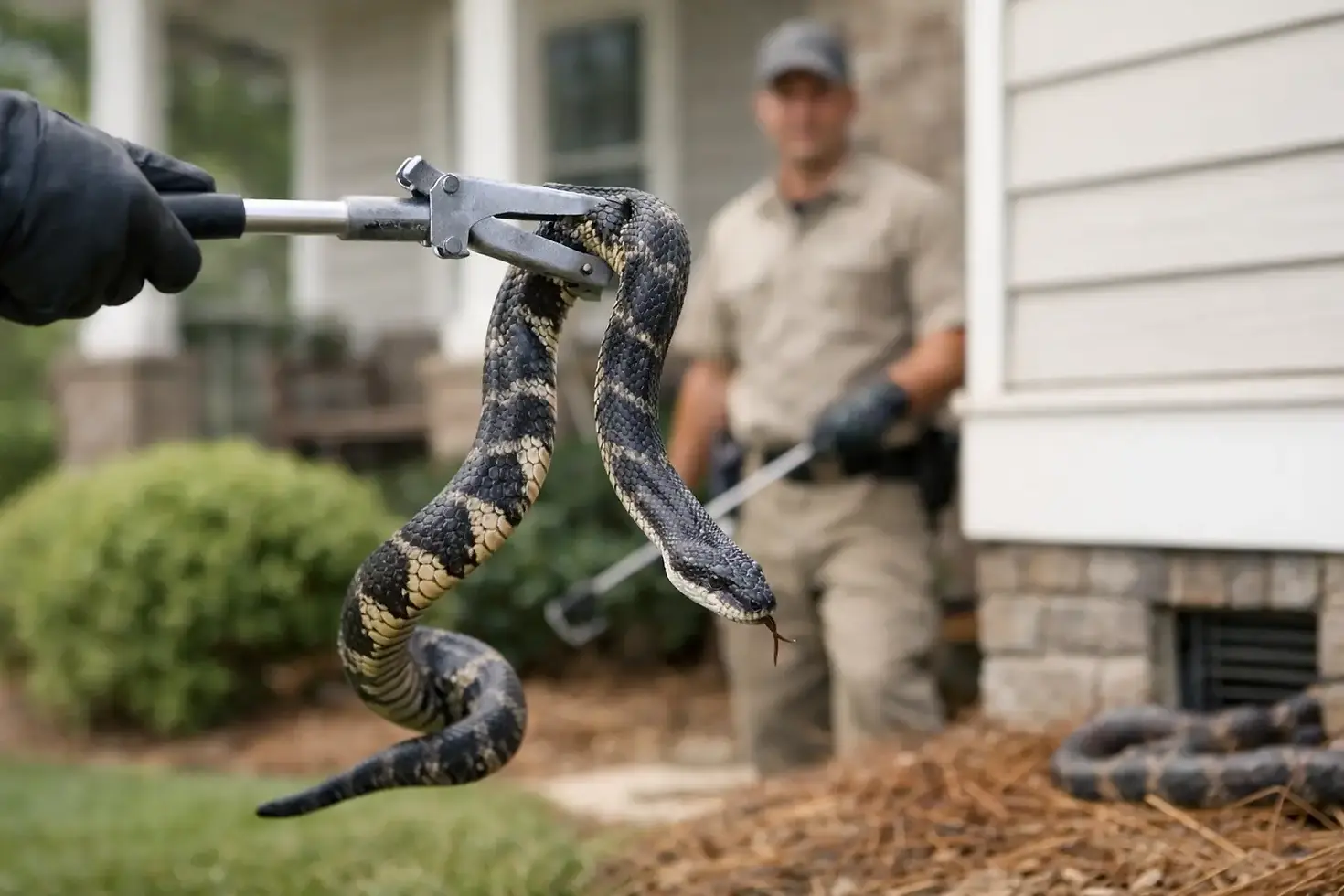
Snake Removal in Columbia: What Homeowners Should Do

A snake beside the back steps or curled up in the garage can turn an ordinary afternoon into a stressful situation fast. Safe snake removal starts with one simple priority: create distance. In Columbia and nearby communities, homeowners often encounter snakes near woodpiles, crawlspace openings, sheds, ponds, and thick landscaping. Most snakes would rather avoid people, but an animal that feels cornered can bite in defense.
The right response protects your family, pets, and the snake. It also helps prevent a quick sighting from becoming an ongoing concern around your home.
What to Do When You Find a Snake
Do not approach the snake to identify it. Many harmless snakes resemble venomous species at a glance, especially when they are partially hidden, moving quickly, or seen in low light. Color patterns, head shape, and behavior can be misleading to an untrained observer. Treat any unknown snake with caution.
Keep children, pets, and curious neighbors indoors or well away from the area. Give the snake a clear path to move away if it is outside, and avoid blocking it in with a shovel, bucket, or lawn equipment. A snake that can leave without being handled often will.
If the snake is in a living area, garage, crawlspace, attic, or another enclosed part of the property, close off access to that space if you can do so without getting close. Keep eyes on it from a safe distance when possible, but do not chase it through the house. A professional can assess the situation and perform safe, efficient relocation.
Avoid these common DIY approaches:
Trying to pick up or pin the snake with a stick, rake, or shovel
Spraying the animal with chemicals, water, or pest-control products
Setting glue boards, which can injure wildlife and create a difficult handling situation
Attempting to kill the snake, when bites frequently happen during these encounters
Sending a pet after it or allowing a dog to investigate closely
A clear photo taken from a safe distance can sometimes help a wildlife professional assess the situation, but it is never worth stepping closer. If you cannot safely photograph it, simply note where it was seen and what direction it traveled.
When Snake Removal Requires a Professional
A snake in the yard is not always an emergency. If it is outdoors, away from people and pets, and has a route back to natural cover, monitoring from a distance may be enough. The decision changes when the snake is inside the home, repeatedly appearing near an entrance, trapped in netting or landscaping, or located where a child or pet could reach it.
Professional snake removal is especially valuable when species identification is uncertain. In the Columbia area, copperheads are a concern for homeowners because their camouflage allows them to blend into leaf litter, pine straw, mulch, and wooded edges. Other native snakes, including rat snakes and racers, can be beneficial because they feed on rodents. A trained local wildlife specialist can make a safer assessment than a homeowner trying to identify an animal under pressure.
Call for help promptly if a snake is in a bedroom, kitchen, bathroom, or other occupied room. The same applies when a snake has entered a crawlspace or attic. Those locations may indicate an opening around utility lines, foundation vents, doors, siding, or roof components. Removing the animal matters, but finding and correcting the access point is what helps protect the property afterward.
Carolina Critters provides humane snake relocation for homeowners in Columbia, Forest Acres, Lexington, and surrounding communities, with a focus on removing the immediate concern and identifying conditions that may draw snakes close to the house.
A Snake in the House Is Different From a Snake in the Yard
A snake indoors deserves a faster response because it is no longer simply passing through natural habitat. It may have entered through a gap beneath an exterior door, an unscreened vent, damaged weatherstripping, a crawlspace opening, or a gap where plumbing or utility lines enter the structure.
Do not assume the snake came in because your home is unclean. Snakes may follow prey, seek warmth or shelter, or enter through an opening that is easy to miss. Mice, rats, frogs, insects, and standing water around the property can all contribute to activity near the foundation.
After relocation, a thorough inspection can reveal the actual vulnerability. Sealing a gap without checking for other access points may simply shift the problem to another side of the house. Effective prevention considers the full exterior, not just the place where the snake was found.
Why Snakes Come Near Homes
Snakes are looking for food, cover, comfortable temperatures, and safe travel routes. A tidy lawn alone does not guarantee that snakes will stay away, but property conditions can make an area more attractive.
Dense shrubs pressed against the foundation, tall grass, stacked firewood, loose debris, rock borders, and cluttered sheds provide cover. Bird feeders can create another indirect issue by attracting seed-eating rodents. If rodents are active in an attic, crawlspace, garage, or outdoor storage area, snakes may follow that food source toward the home.
Moisture also plays a role. Leaking spigots, poor drainage, pet water left outside, and low areas that hold water can attract frogs and insects, which then attract snakes. In some cases, a snake sighting is less about the snake itself and more about the habitat and prey available around the property.
That is why lasting snake prevention often overlaps with rodent control, crawlspace repair, and exterior exclusion. A property with accessible food and easy entry points can support repeat wildlife activity of several kinds.
Prevention That Makes a Real Difference
The goal is not to turn your yard into a bare, unusable space. It is to reduce hiding places and close the routes that bring wildlife too close to the house. Start by keeping grass trimmed and moving woodpiles, stacked materials, and yard debris away from exterior walls. Store firewood on a raised rack when possible, rather than directly on the ground.
Check exterior doors for gaps at the threshold and replace damaged sweeps or weatherstripping. Inspect foundation vents, crawlspace doors, garage corners, pipe penetrations, and areas where siding meets masonry. Small openings can become access points for rodents, and rodents can increase the chance of snake activity around the structure.
Keep mulch and dense plantings from touching the foundation. You do not need to remove landscaping completely, but a visible maintenance strip makes it easier to inspect the perimeter and reduces hidden travel lanes. Address standing water and outdoor leaks, and keep pet food indoors rather than leaving it out overnight.
If you have seen snakes more than once, do not rely on repellents as your primary solution. Products marketed as snake repellents often produce inconsistent results because they do not remove shelter, prey, or entry points. Exclusion and habitat changes take more effort, but they address the conditions that matter.
Protecting Pets and Children During Snake Season
Dogs are often bitten because they investigate movement in leaves, brush, or under decks. Keep pets leashed in unfamiliar or heavily wooded areas of the yard, particularly during warm weather and at dusk. Teach children not to reach into holes, woodpiles, tall grass, or spaces beneath porches and sheds.
If a person is bitten by a snake, call 911 immediately. Keep the person calm and still, remove rings or tight items near the affected area, and seek emergency medical care. Do not cut the wound, try to suck out venom, apply a tourniquet, or use ice. If a pet is bitten, contact an emergency veterinarian right away.
The safest response to a snake sighting is calm, practical action: back away, secure the area, and bring in trained help when the animal is in or too close to your home. A safe relocation paired with careful exclusion gives your household room to enjoy the yard without wondering what may be hiding near the next step.


Comments