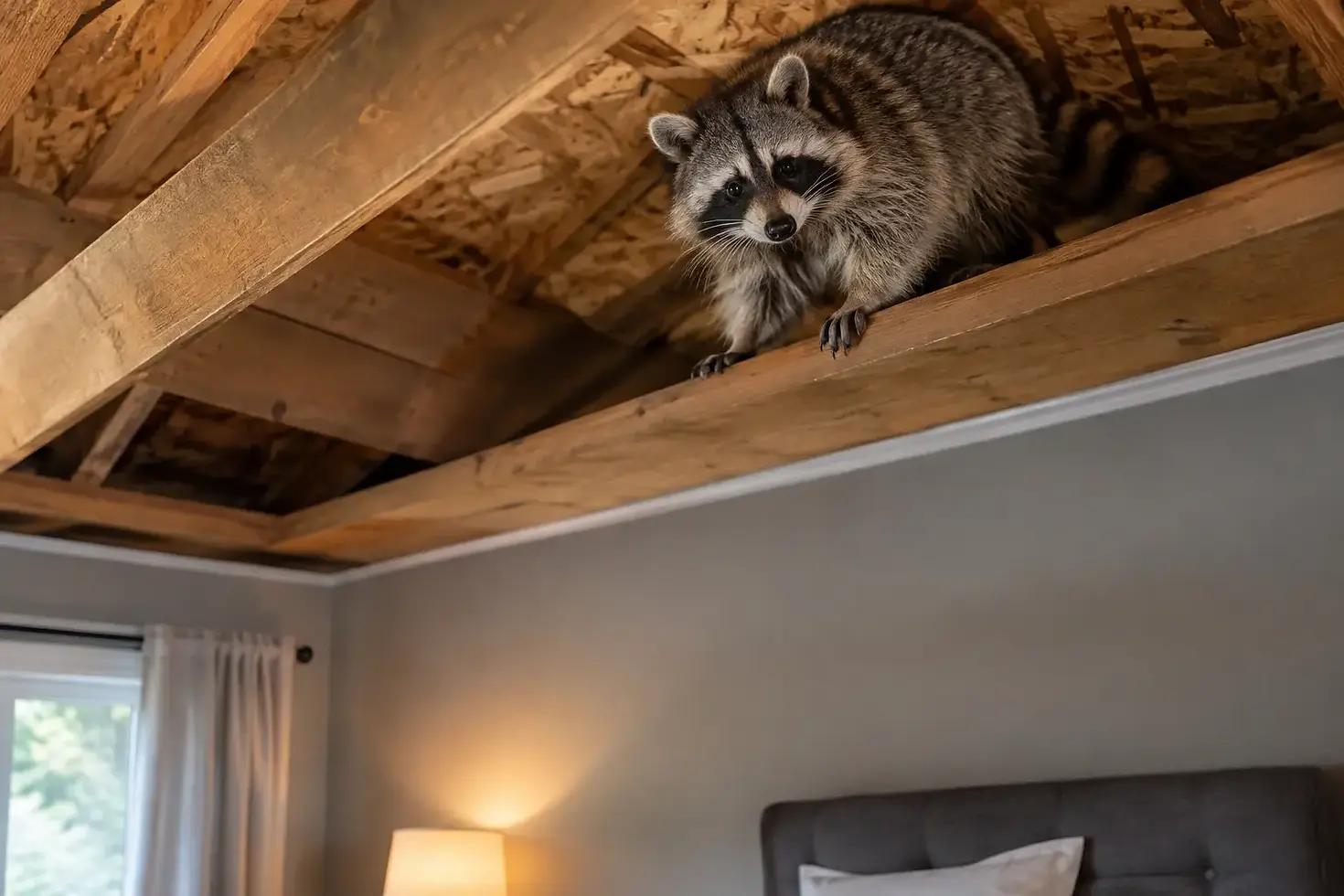
Why Are Raccoons Noisy Upstairs at Night?

A heavy thump above the ceiling is unsettling. Add scratching, chattering, or what sounds like furniture being dragged across the attic, and many Columbia homeowners ask: why are raccoons noisy upstairs? In most cases, a raccoon has found its way into the attic, crawlspace ceiling, or another enclosed area of the home and is using it as a den.
Raccoons are strong, intelligent, and surprisingly active animals. A small gap at a roof return, vent, soffit, chimney, or damaged fascia can give them access to a warm, dry space above your living area. The noise may be annoying at first, but it can also signal a developing property-damage and sanitation problem that should not be ignored.
Why Are Raccoons Noisy Upstairs?
Raccoons do not move quietly. An adult can weigh 10 to 20 pounds or more, and its movement often sounds much larger than people expect. Unlike mice or squirrels, raccoons may create loud, deliberate noises as they walk, climb, shift insulation, or search for a place to rest.
The timing can offer a clue. Raccoons are usually most active at night, so homeowners often hear movement shortly after dark, before dawn, or during the early morning hours. You may hear slow footsteps, repeated bumps, scratching near the eaves, or a loud scurrying sound as the animal moves from one section of the attic to another.
Noise can become especially persistent during denning season. A female raccoon may choose an attic as a protected place to raise her young. In that situation, the sounds may include soft chirping or chittering from kits, followed by heavier movement from the mother as she comes and goes. Removing or sealing an entry point without confirming whether young are inside can separate a mother from her babies and leave animals trapped in the structure.
Common Sounds a Raccoon Makes in an Attic
The sound is not always enough to identify an animal with certainty, but raccoons tend to leave a recognizable pattern. They create heavier footsteps than squirrels, make more sustained noise than rodents, and may be heard moving insulation or pulling at building materials.
Homeowners may also hear scratching around a vent or roofline, knocking noises as an animal shifts against framing, or growling and vocalizing if more than one raccoon is present. A raccoon entering and leaving through the same opening can make the disturbance seem concentrated in one spot, usually near an exterior wall, soffit, or roof edge.
What the Noise May Mean for Your Home
An attic raccoon is not simply a noisy visitor. It may tear or widen an opening to get inside, damage soffits and roof vents, flatten insulation, and leave urine and droppings behind. Raccoons can also disturb ductwork, chew or dislodge wiring, and contaminate stored belongings.
Urine odor is often one of the first signs homeowners notice after the animal has been present for a while. Raccoons commonly create latrine areas, meaning waste can accumulate in a repeated location. Cleanup requires more than sweeping up visible debris. Contaminated insulation or materials may need to be removed, surfaces need proper treatment, and damaged areas should be repaired before the space is closed.
There is also a safety concern. Raccoons can carry parasites and diseases, and they may bite or scratch when cornered, frightened, or protecting young. Never enter a tight attic space to confront an animal, and do not try to smoke it out, poison it, or block the opening while you believe it is still inside. Those methods can create a trapped-animal emergency, increase damage, and put people and pets at risk.
Raccoon, Squirrel, or Rodent? The Difference Matters
Homeowners often describe every attic sound as “scratching,” but the type of animal affects the right removal plan. Squirrels are more likely to be active in daylight and generally produce quicker, lighter movement. Rats and mice may create scratching or chewing sounds, but their movement is usually lighter and more frequent than the heavy thumps associated with a raccoon.
Raccoons are commonly active after dark and can sound like a person walking or a medium-sized dog moving overhead. They also leave larger visible evidence outdoors, such as damaged vents, pulled-back soffit material, muddy tracks, or dark staining around an access point.
Even so, sound alone is not a diagnosis. An experienced wildlife professional should inspect the roofline, attic, crawlspace, and exterior for entry points, tracks, nesting material, droppings, and signs of young. The goal is to identify the animal correctly before starting removal or exclusion work.
What to Do When You Hear a Raccoon Upstairs
Start by keeping your distance. Keep children and pets away from the area below the noise, and avoid opening an attic hatch if the animal could be nearby. If you can safely observe from outside, look for obvious damage around vents, soffits, chimney caps, and roof edges. Do not climb onto the roof or attempt to handle a raccoon yourself.
It helps to note when the activity occurs and where you hear it. Nighttime thumping near one section of the roof, odors in an upstairs room, or a sagging vent can give a wildlife technician useful information during an inspection. If you see a raccoon entering or leaving, do not seal that opening yet. There may be additional animals inside, particularly if a female has young.
A proper response includes humane removal, confirmation that all animals are out, and professional exclusion of the entry points. The work should also address cleanup and repair where needed. Simply trapping one raccoon without securing the access area can leave the home open to another raccoon, squirrel, or rodent within days.
Humane Removal Needs a Complete Plan
The right solution depends on the season, the location of the den, and whether young are present. A technician may use one-way exclusion methods when appropriate, carefully allowing the animal to leave while preventing it from returning. When kits are involved, the approach must protect the young and avoid separating the family unnecessarily.
After removal, lasting protection comes from repairing the conditions that allowed access. That can include securing roof vents, reinforcing weak soffits, repairing fascia, sealing construction gaps, and screening vulnerable openings with materials built to withstand wildlife pressure. Attic cleanup may be necessary when nesting, waste, or damaged insulation has been left behind.
This full process matters because raccoons remember reliable shelter. If an attic was easy to enter once, it may attract the same animal again or become an opportunity for other nuisance wildlife. Effective exclusion protects the home without relying on a temporary fix.
When to Call for Raccoon Removal in Columbia, SC
Call for professional help promptly if the noises are heavy, occur at night, continue for more than a day or two, or are accompanied by an odor, ceiling stain, damaged roofline, or visible animal activity. Faster action can limit insulation damage and reduce the chance that a small opening becomes a larger repair.
Carolina Critters provides humane raccoon removal for homes in Columbia, Forest Acres, Lexington, and nearby communities. The process focuses on safe and efficient relocation when needed, careful inspection for young, entry-point exclusion, cleanup, and repairs that help protect your home from future wildlife access.
A raccoon upstairs is stressful, but it is a problem with a clear path forward. Keep your family away from the animal, leave the entry point untouched, and arrange an inspection before the damage - or the noise - gets worse.


Comments