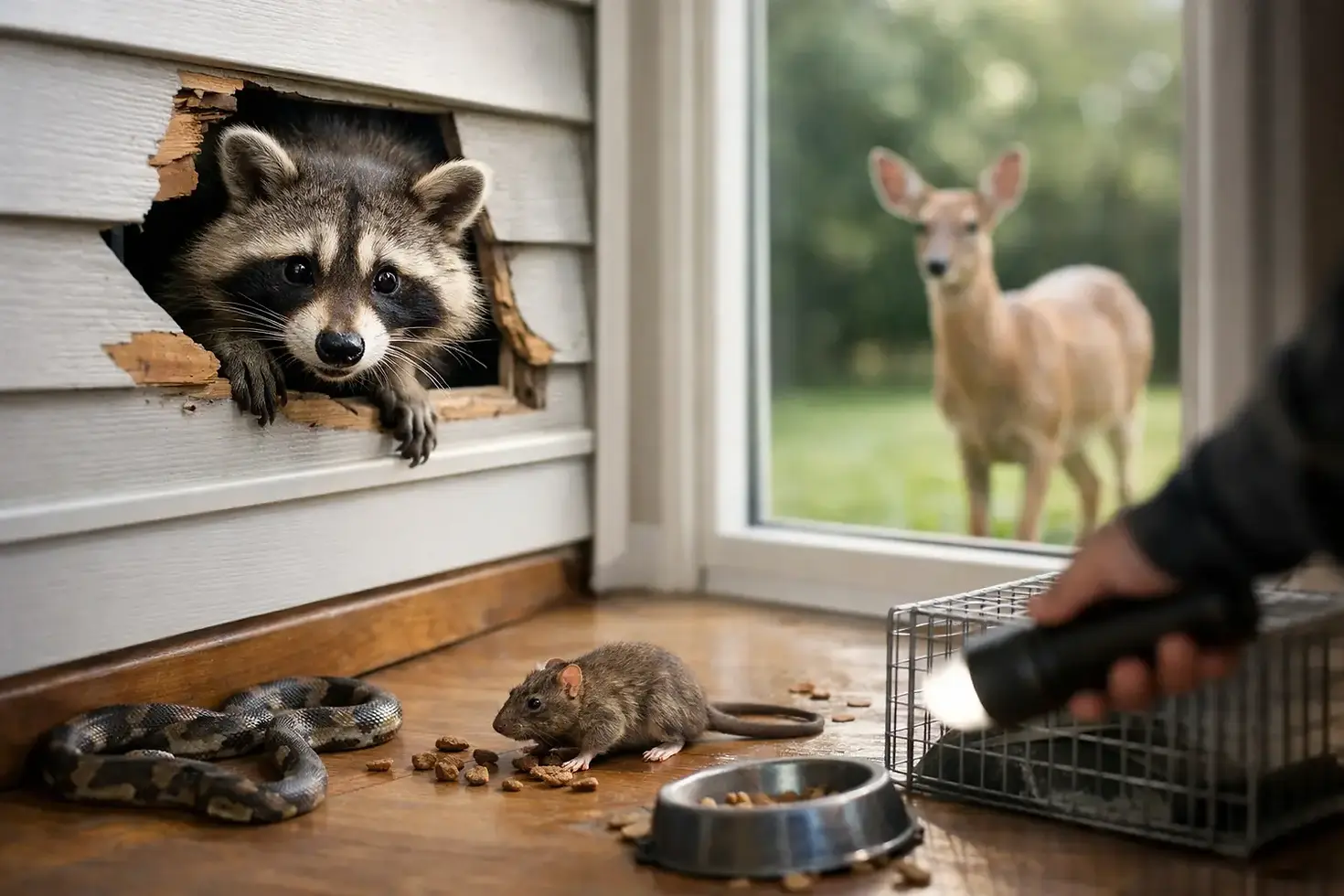
Emergency Animal Intrusion Guide for Homeowners

A raccoon scratching above the ceiling at midnight, a bat circling a bedroom, or a snake appearing beside the back door can turn an ordinary day into a real safety concern. This emergency animal intrusion guide gives Columbia-area homeowners clear next steps: protect people and pets first, avoid making the situation worse, and arrange humane professional help that also addresses how the animal got in.
Emergency animal intrusion guide: the first 10 minutes
Your first job is not to catch, scare, feed, or identify the animal. It is to create distance. Move children, pets, and guests into a separate room or indoors, then close interior doors when doing so will safely contain the animal without cornering it. Keep everyone calm and avoid sudden movements, loud noises, or attempts to strike the animal with a broom or shovel.
If the animal is inside your living space, give it an escape route only when that can be done safely. For example, a bird that has flown into a screened porch may leave through a wide-open exterior door. A raccoon in a kitchen, a bat in a bedroom, or a snake in a laundry room is different. Do not stand near the animal or try to herd it outside. Frightened wildlife can bite, scratch, or move into a wall, attic, crawlspace, or another inaccessible part of the home.
Keep a safe distance, observe from afar, and note where the animal went. That information helps a wildlife professional respond efficiently. If there has been a bite, scratch, or possible contact with saliva, seek medical guidance promptly. Wash any wound thoroughly with soap and water while arranging care.
When the situation needs immediate attention
Some animal problems can wait for a scheduled inspection. Others should be treated as urgent. Call for prompt professional assistance if a bat has been in a room where someone was sleeping, a young child was unattended, or a pet may have had contact with it. Because bat encounters can involve health risks even when a bite is not obvious, do not release or handle the bat before you have received appropriate guidance.
A snake inside the house, in a high-traffic yard area, or near children and pets also calls for a fast response. South Carolina has both harmless and venomous snakes, and trying to identify one from a few feet away is not a safe plan. Keep people and pets back, watch the snake from a safe location if possible, and allow trained help to handle safe and efficient relocation.
Raccoons, squirrels, and rodents create a different kind of emergency. A raccoon in an attic may tear insulation, damage ductwork, and leave contamination behind. Squirrels and rodents can chew wiring, which can raise fire concerns, especially if you notice flickering lights, a burning odor, or damage near electrical components. If you smell smoke, see sparks, or suspect an active electrical hazard, leave the area and contact emergency services before addressing the wildlife issue.
What to do with bats in the home
Bats commonly enter through small gaps around rooflines, vents, chimneys, and siding transitions. They may appear inside after becoming separated from a colony in an attic or wall void. Seeing one bat indoors does not always mean there is a large infestation, but it is reason to inspect the home carefully.
If a bat is flying in a room, close the door to isolate the area and remove pets if you can do so without getting close to it. Do not swat at it, use a vacuum, or attempt to catch it bare-handed. If no one has had possible contact and the bat is contained in an unoccupied room, a professional can evaluate the safest next step.
The long-term solution is not simply getting one bat outside. Humane bat exclusion identifies the entry points, allows bats to exit without being trapped inside, and seals access after the proper process is complete. This protects the home while respecting the animal and avoiding the common mistake of sealing bats into a wall or attic.
What to do when a raccoon is in the attic or crawlspace
Raccoons are strong, intelligent, and especially determined when a mother has chosen an attic, chimney, or crawlspace as a denning spot. You may hear heavy footsteps, thumping, chattering, or repeated movement at night. Avoid the temptation to play loud music, use chemical repellents, or block the opening immediately. If young raccoons are present, separating a mother from her babies can create a more complicated and distressing problem.
Stay out of the attic or crawlspace. These spaces can contain unstable flooring, exposed wiring, droppings, and an animal that feels trapped. A trained wildlife technician can assess the entry point, determine whether young are present, remove the animals humanely, and close the access route at the right time.
Cleanup matters after removal. Raccoon waste can contaminate insulation and surfaces, while torn soffits, roof vents, and crawlspace covers can invite the next animal in. The best response includes remediation and repair, not a temporary eviction.
What to do when you find a snake
Most snakes want nothing to do with people. The danger often comes when someone tries to move one with a rake, grab it, or force it into a bucket. Give the snake room. Back away slowly, bring pets inside, and keep visual contact only if you can do it from a safe distance.
Do not rely on online photos to decide whether a snake is harmless. Color and markings can vary, and a poor view can lead to a bad decision. Never attempt to kill a snake. Aside from the risk of a defensive bite, removing one snake does not correct the conditions that drew it close to the home.
A professional inspection can identify likely attractants such as heavy vegetation, stacked debris, open crawlspace gaps, rodent activity, or unsecured pet food. Snake relocation is most effective when paired with property corrections that reduce future encounters.
Rodents and squirrels: act before damage spreads
Rodents and squirrels are smaller than raccoons, but their damage can become serious quickly. Scratching in walls, daytime scampering in the attic, chewed food packaging, droppings, and gnaw marks near utility areas all deserve attention. Squirrels are often active during the day; rodents may be heard more often at night.
Avoid placing poison in an attic, wall, or crawlspace. Animals can die in inaccessible areas, creating odor and insect problems, while poisons also pose risks to children, pets, and non-target wildlife. Store food in sealed containers, remove accessible pet food, and keep trash secured, but do not assume housekeeping alone will solve an active entry problem.
Professional trapping and exclusion focus on the source. Once the animals are removed, openings around vents, eaves, utility penetrations, roof intersections, and crawlspace access points should be repaired with materials designed to withstand chewing and weather. Carolina Critters approaches these calls as property-protection work, combining humane removal with cleanup, repairs, and practical prevention.
What not to do during an intrusion
A few common reactions can turn a manageable wildlife issue into a larger one:
Do not touch, corner, chase, or feed the animal.
Do not seal an opening until you know animals are not trapped inside.
Do not use smoke, fire, harsh chemicals, or homemade fumigation methods.
Do not send a child, pet, or untrained adult into an attic, crawlspace, or tight wall area.
Do not ignore droppings, strong odors, chewed wiring, or damaged vents after the animal is gone.
The trade-off is simple: a quick DIY fix may feel satisfying, but it can leave young animals behind, drive wildlife deeper into the house, or allow repeat entry through another gap. A careful response protects both your household and the animal.
Prepare your home before the next surprise
Wildlife emergencies are less disruptive when the home is already protected. Walk the exterior periodically, especially after storms, and look for loose vent covers, damaged soffits, roofline gaps, openings around pipes, and crawlspace doors that no longer close tightly. Trim branches away from the roof where practical, keep outdoor food sources controlled, and address rodent activity early.
If an animal is currently inside, stay calm, keep your family at a safe distance, and get qualified help rather than taking a risky shortcut. Prompt humane removal, followed by thorough exclusion and repair, is how a stressful wildlife encounter becomes a secure home again.


Comments